What to Know Before Booking a Wasps Nest Removal in Denver Yards
Finding an active stinging insect colony near your front porch quickly turns a relaxing afternoon into a stressful hazard. Many homeowners grab a can of foaming spray from the hardware store without realizing the severe danger they are putting themselves in. SPLAT! Pest Management provides safe and highly technical extraction methods to clear these threats from your property. Knowing what to expect before you schedule a professional removal keeps your family secure while the issue is resolved.
Not all stinging insects behave the same way or build their homes in identical locations. Identifying the specific type of threat allows you to choose an exterminator who utilizes the correct protective protocols. We put together this guide to help you navigate the hiring process and prepare your yard for a professional visit. Taking these simple steps guarantees a swift resolution to your outdoor pest problem.
In This Article:
- Identifying High Risk Nest Locations
- Red Flags When Evaluating Wasp Exterminators
- Questions You Must Ask Your Pest Professional
- How do fertilized wasp queens survive freezing winter temperatures inside residential attics?
- Preparing Your Yard For Removal
Identifying High Risk Nest Locations
Different species prefer entirely different nesting environments around your home exterior. Spotting the entry points helps your technician prepare the right equipment before they even pull into your driveway.
- Underground Cavities: Yellow jackets frequently build massive colonies inside abandoned rodent burrows that are easily disturbed by a passing lawnmower.
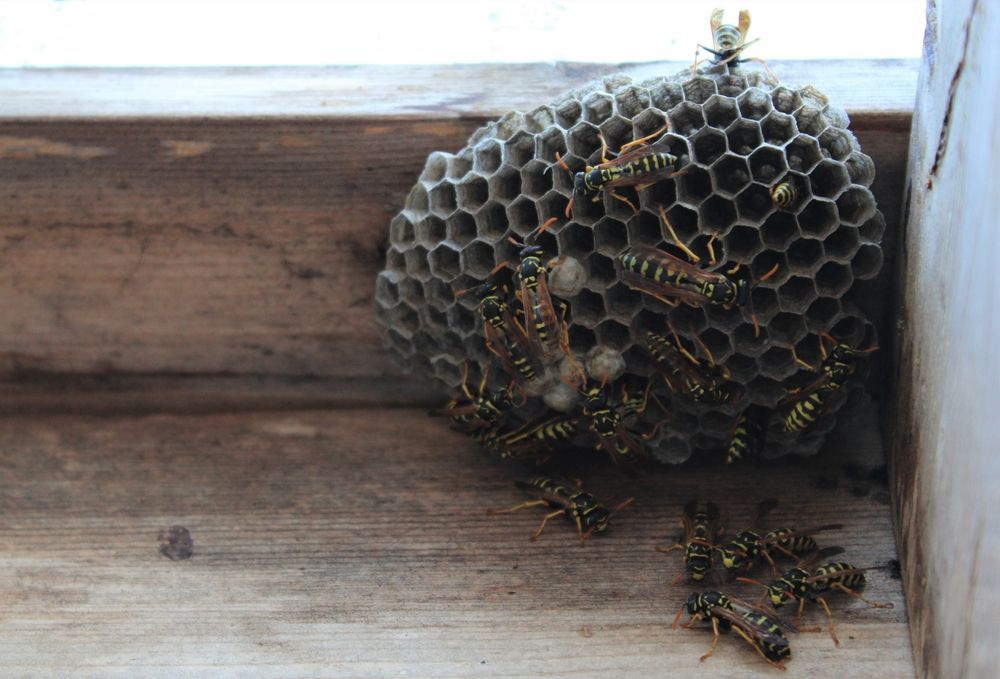
- Eaves and Soffits: Paper wasps prefer building their umbrella shaped homes under the protective overhangs of your roofline.
- Wall Voids: Insects flying in and out of tiny cracks in your brick mortar indicate a hidden nest deep inside the structural wall framing.
Red Flags When Evaluating Wasp Exterminators
Hiring a reliable professional requires looking closely at their safety protocols and guarantees. You should avoid companies that refuse to explain their methods or pressure you into signing long term contracts for a single nest removal.
- Lacking Protective Gear: An exterminator who shows up to handle an aggressive hornet nest without a professional bee suit is a major liability.
- Vague Guarantees: Be highly cautious of providers who do not offer a clear retreatment policy if the colony survives the initial application.
- Refusing to Inspect: A legitimate technician will always survey the rest of your property to ensure there are no secondary nests hiding nearby.
Finding a friendly professional who takes the time to educate you changes the entire service experience. It is a pattern the team at SPLAT! Pest Management hears regularly from clients facing aggressive swarms.
► Client Experience: Matthew Borcic shared “Ernie came out to take care of some wasp nests for me today. What a great guy! He took the time to give me some tips on what bait to use in my traps I bought online. He took down all of the nests outside of my home and sprayed the exterior within a few minutes.”
Sharing practical prevention tips and acting quickly is exactly why Matthew highly recommends our service team.
Questions You Must Ask Your Pest Professional
Protecting your property means having a direct and honest conversation with the technician before the work begins. Asking the right questions ensures the proposed treatment plan is safe for your specific environment.
- Ask About Pet Safety: How long do my dogs need to stay inside the house after the liquid treatment is applied to the exterior siding?
- Ask About Nest Removal: Do you physically scrape down and remove the paper structure after the colony is neutralized?
- Ask About Prevention: What exterior modifications can I make to stop new queens from building here next spring?
How do fertilized wasp queens survive freezing winter temperatures inside residential attics?
When the cold weather hits Denver, the existing worker colony dies off completely. However, newly fertilized queens actively seek out warm cracks in your home exterior to hibernate through the freezing months.
- Insulation Nesting: Queens burrow deep beneath fiberglass attic insulation to insulate themselves from the extreme cold.
- Siding Gaps: Loose vinyl siding provides the perfect windbreak for dormant queens waiting for the spring thaw.
- Spring Emergence: Once the weather warms up, these hidden queens wake up and immediately begin chewing wood fibers to build a brand new nest on your property.
Preparing Your Yard For Removal
Dealing with aggressive stinging insects demands a cautious approach and strict reliance on safety protocols. By watching out for service red flags and asking smart questions, you guarantee your chosen provider actually understands the threat. Contact our local extermination team today to schedule an inspection and take back your backyard.
Share This Blog